
-
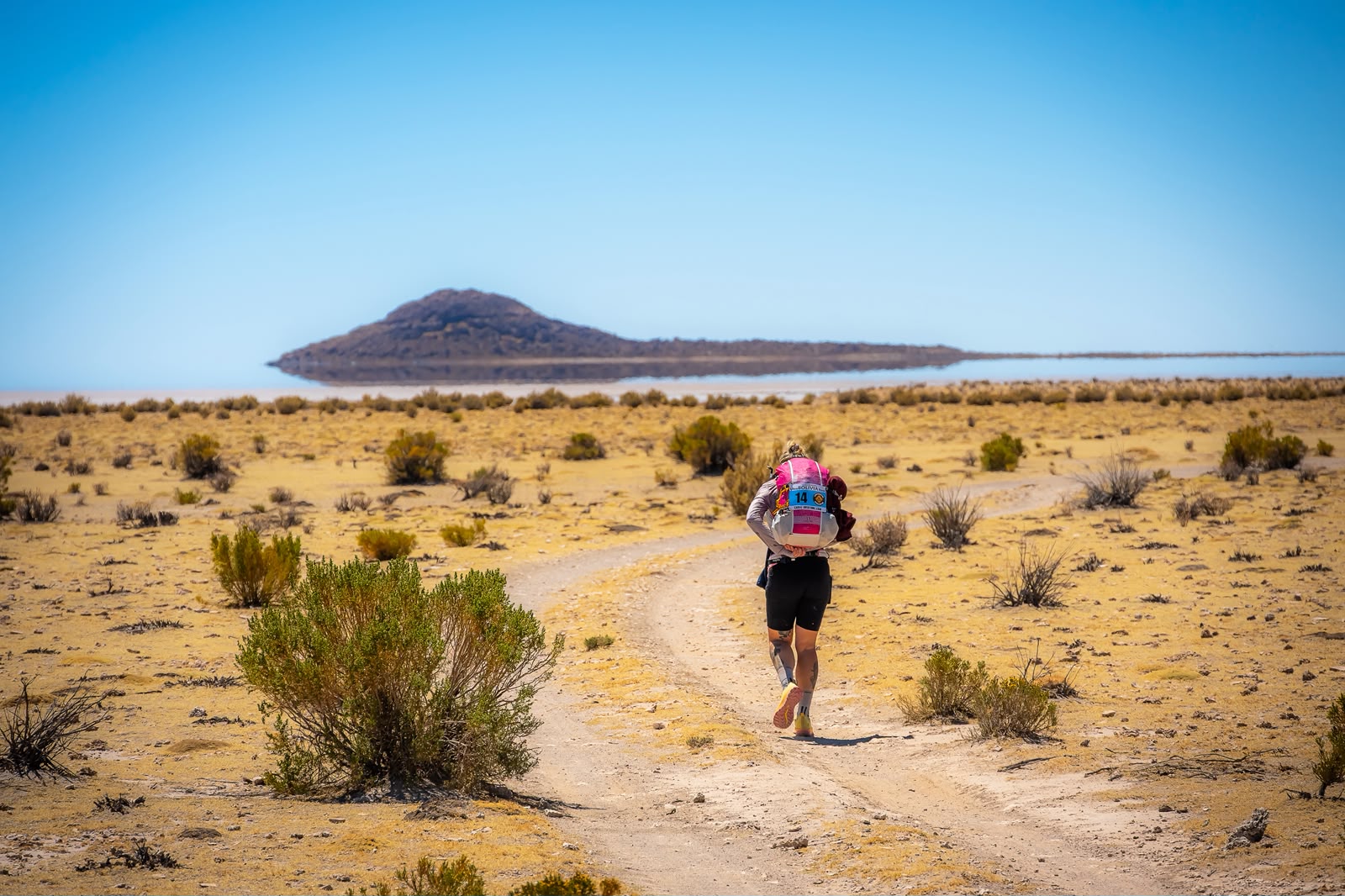
220 Kilometers Through Bolivia
—
An Adventure That Lasts
-
220 Kilometers Through Bolivia
—
An Adventure That Lasts
Some races you run, cross the finish line, and eventually they become a nice memory.
And then there are these races that do something to you. That stay in your head, but above all in your heart.
Bolivia was a race just like that for me.
- 220 km Total distance over 7 stages
- 3,600–4,100 m Altitude during the race
- 21–27 September 2026 A week full of adventure
- Self-supported Everything I needed for a week, I had to carry myself
- Temperatures Over 35°C during the day and sometimes around -2°C at night
Between Icy Cold and Endless Expanse
220 kilometers through a landscape that was at times so surreal that, despite all the effort, I kept having to stop just to look.
We were moving at altitudes between 3,600 and 4,100 meters, sometimes starting in the dark and in icy cold. Later came the sun, the heat, and again and again that wind. And on top of that, this incredible expanse, where I sometimes felt like it simply never ended. Not easy for the mind.
The body works differently at this altitude. You notice that despite all preparation. Your breathing changes, recovery becomes more important, and things you never think about at home suddenly cost you energy.
And yet — or maybe precisely because of that — I love races like this.
At some point, your own world becomes very small. It's no longer about deadlines, messages, or everything that needs to get done next week. It's about eating. Drinking. Breathing. Moving forward.
One step. And then another.


In a stage race, you also quickly realize what's really important. And right at the top of that list, for me, are my feet. 220 kilometers don't forgive much in that regard.
A small pressure point on the first day can decide, a few days later, whether running is still fun or every step hurts. That's why I leave as little as possible to chance when it comes to my gear.
In Bolivia, I ran in my Joe Nimble Trail Addict Flow 2.
A shoe I already knew from my training, and one
I knew I could rely on.
What matters most to me is the space my feet have in it. Because honestly:
in a race like this, at some point I no longer care how great a shoe feels during the first five kilometers. What I care about is how it feels after 30 or 40 kilometers.


And what interests me even more is how my feet feel the next morning,
when I get up, put the shoes back on, and know:
today there are many more kilometers ahead of me.
Because in a race like this, a philosophy eventually becomes something pretty simple: as long as my feet work, I can keep running.

I rarely find the answer in any big motivational quotes. Most of the time, it simply lies in the next step. In that moment, I don't have to finish all 220 kilometers. I just have to get to where I'm looking right now. And once I'm there, it continues a bit further. That's exactly what I love about ultra running.
For me, big goals don't come from a single big moment. They come from many small decisions. The decision to get up again in the morning. To put on your shoes. To start running. And not to stop just because it's getting hard.

What Remains in the End
But when I think of Bolivia today, it's still not the placement that comes to mind first.
I think of this incredible landscape.
- Of the icy cold in the morning and the sun during the day.
- Of the wind. Of this endless expanse.
- Of the people with whom I got to share this adventure.
- Of the laughter we shared.
- Of the exhaustion.
- Of the moments when it was really hard.
- And of those other moments, when I was simply happy and thought:
And I think of my body, which carried me through this adventure. Of my legs. And especially of my feet, which just kept going, day after day. Maybe that's exactly one of the most beautiful realizations I brought home from Bolivia:
220 kilometers sound huge. Almost unimaginable. But in the end, even 220 kilometers consist only of individual steps.
And sometimes, in the beginning, you don't even need to know whether you can do it all. You just have to be willing to take the first step.
And then the next one.


Crédit photo: @Canalaventure / @josuefphoto


